

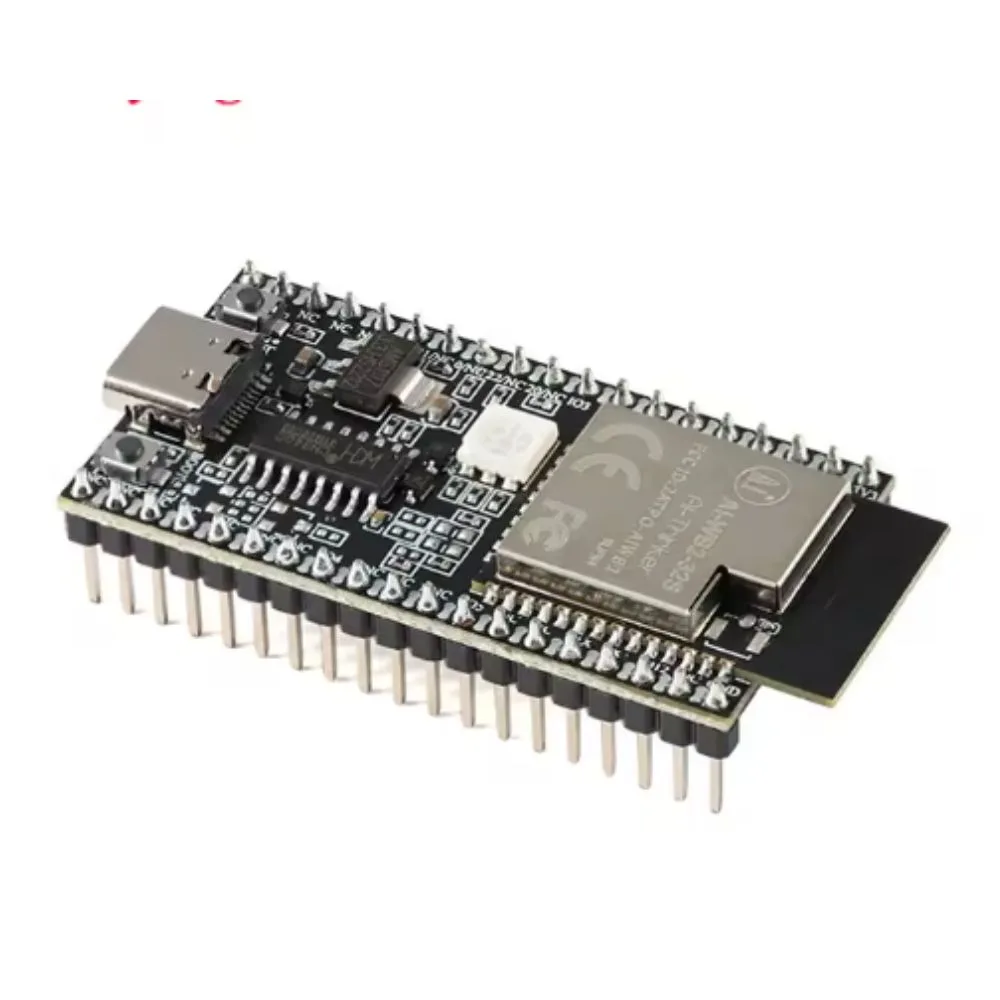

The Ai-WB2-32S-Kit is a development board built around the BL602 WiFi + Bluetooth 5.0 module/SoC. It supports WiFi 802.11 b/g/n (2.4 GHz) and BLE 5.0 (along with Bluetooth Mesh) and is designed for IoT, smart-home, wearable, sensor and general embedded wireless applications.
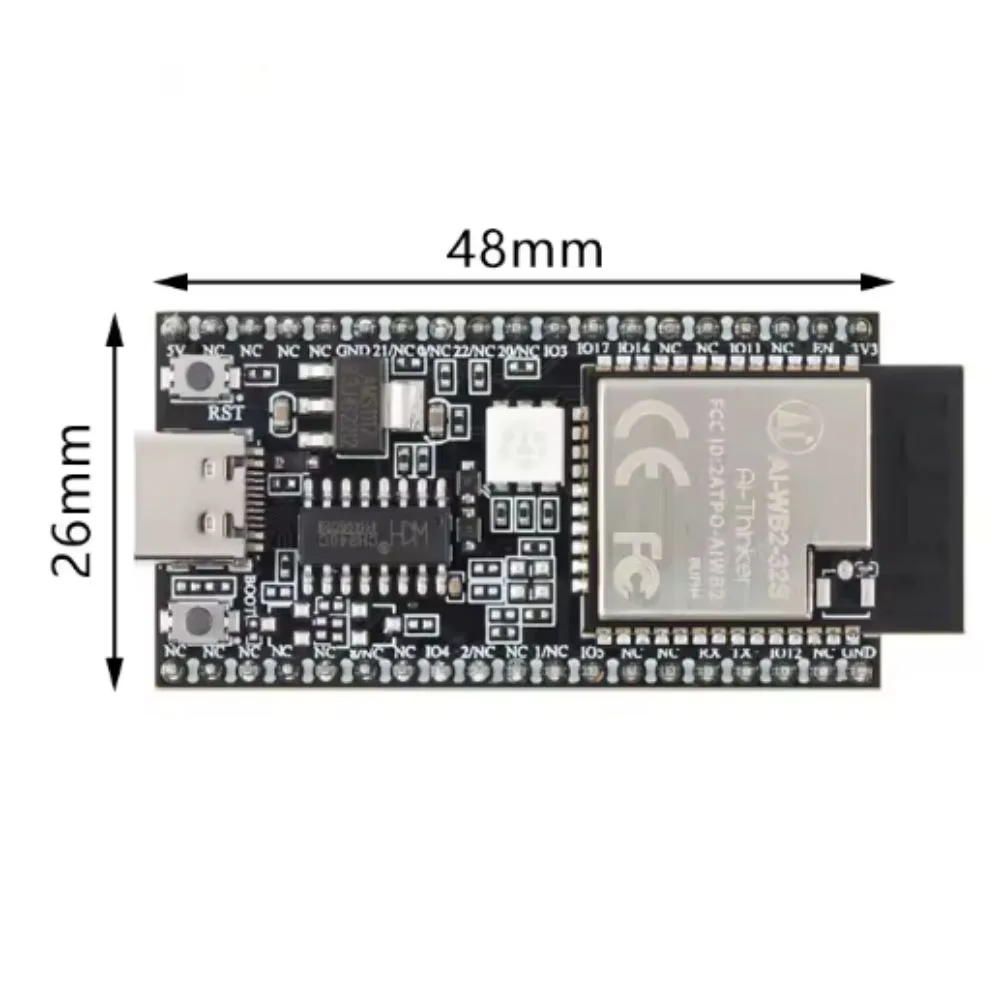
The board comes with USB-C interface for power and programming, breakout pins, onboard PCB antenna, and is quite compact (~55 mm × 25.4 mm) according to one listing.
While marketed in a “NodeMCU” style (in its naming), it is not based on the popular ESP32 architecture — the core chip is BL602. This is an important distinction. Someone on Reddit noted:
“Your problem is almost certainly because your device is not an ESP32, and you are telling Arduino IDE to use the ESP32 build tools etc. You were shipped a board with a BL602…”
So if you were expecting an ESP32 variant, be aware of the difference.
Key Features
Here are some of the standout features of the Ai-WB2-32S-Kit:
-
Supports WiFi 802.11 b/g/n at 2.4 GHz band, with a maximum rate of ~72.2 Mbps (20 MHz bandwidth) according to the spec sheet.
-
Supports Bluetooth BLE 5.0 and Bluetooth Mesh topologies.
-
Security features: WiFi security including WPS/WEP/WPA/WPA2 Personal/WPA2 Enterprise/WPA3.
-
The BL602 core: 32-bit RISC CPU, about 276 KB RAM on the chip (module spec).
-
Rich peripheral interfaces: SDIO, SPI, UART, I²C, IR remote, PWM, ADC, DAC, PIR, GPIO.
-
Multiple power supply options: The board supports 3.3 V or 5 V supply (via USB-C / micro USB) and current of at least ≥500 mA recommended for stable operation.
-
Low-power modes: the module supports various sleep modes; deep sleep current is specified as ~12 µA in datasheet.On-board PCB antenna for wireless connectivity (so you don’t need an external antenna by default).
Specifications
Here’s a consolidated summary of the major specifications. For full detail refer to the official specification document.
| Parameter | Value / Notes |
|---|---|
| WiFi Protocol | IEEE 802.11 b/g/n (2.4 GHz) |
| Maximum WiFi Rate | ~72.2 Mbps (20 MHz bandwidth) |
| Bluetooth | BLE 5.0 + Bluetooth Mesh support |
| Core Processor | BL602 32-bit RISC CPU |
| RAM on Module | ~276 kB RAM (internal to the BL602) |
| Flash Memory | Many listings show 4 MB flash/ default config for the board. |
| Supply Voltage | USB-C 5 V or 3.3 V input acceptable. Current ≥500 mA recommended. |
| Operating Temperature | –40 °C to +85 °C |
| Board Dimensions | ≈ 55 mm × 25.4 mm |
| Antenna | On-board PCB antenna |
| Interfaces | UART / SPI / I²C / PWM / ADC / DAC / GPIO / PIR etc. |
| Security Features | AES (128/192/256 bit), SHA-1/224/256, TRNG, ECC-256 signature boot, etc. |
Practical Tips & Things to Watch
Here are some recommendations and caveats if you plan to use this board:
-
Toolchain & SDK: Because the BL602 is not ESP32, you’ll need to use the correct SDK (for BL602) or a compatible Arduino/Core port designed for BL602. Many users have reported difficulties when assuming it was an ESP32.
-
Driver for USB-C/Serial: On some boards the USB-serial bridge might be CH340 or similar. Ensure you have the right drivers installed on your computer.
-
Power supply: Ensure your USB supply can deliver stable current (≥500 mA) especially when WiFi is active. Voltage drops can cause instability.
-
Antenna clearance: The on-board antenna requires clear space around it for good performance; avoid placing large metal objects directly near the antenna region.
-
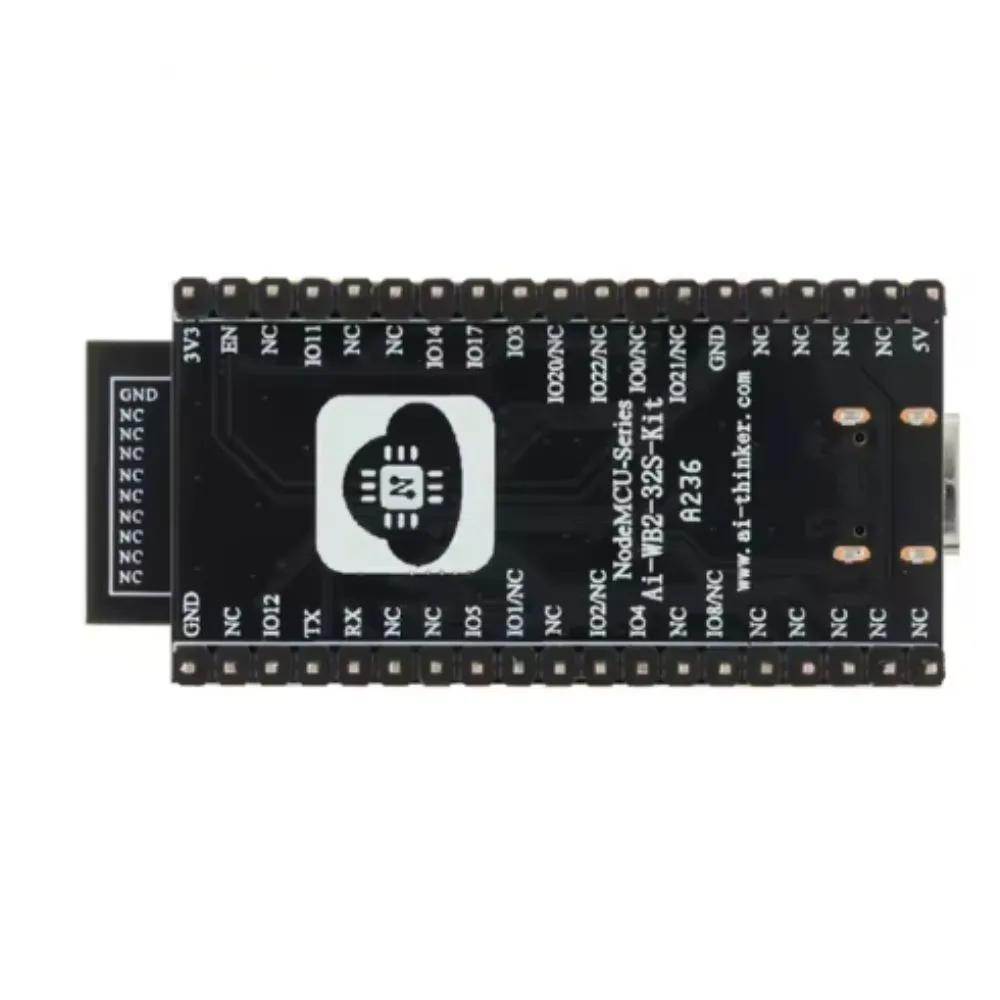
GPIO limitations: Review the pin definition sheet — many pins may be “NC” (not connected) or reserved; check boot-mode requirements (if any) and ensure the pins you plan to use support the functions you need.
-
Firmware / Bootloader: Some boards require holding a “BOOT” or “FLASH” button during programming. Check the board’s layout and documentation.
-
Low-power / Sleep: If you plan battery-powered use, familiarize yourself with the sleep modes of BL602 and how to use them to reduce consumption.
-
Community & Libraries: Because BL602 is less common than ESP32, community support and libraries may be less mature; expect a bit more work. The datasheet and spec docs are essential.
-
Labeling & Expectation: Despite the “NodeMCU” style naming, treat this board as a separate ecosystem from ESP32/ESP8266. Don’t assume full compatibility.
-
Project fit: This board is ideal for WiFi + BLE IoT/embedded projects (sensors, smart-home nodes) where you don’t need the heavy processing of larger MCUs but need wireless capability


There are no reviews yet.