

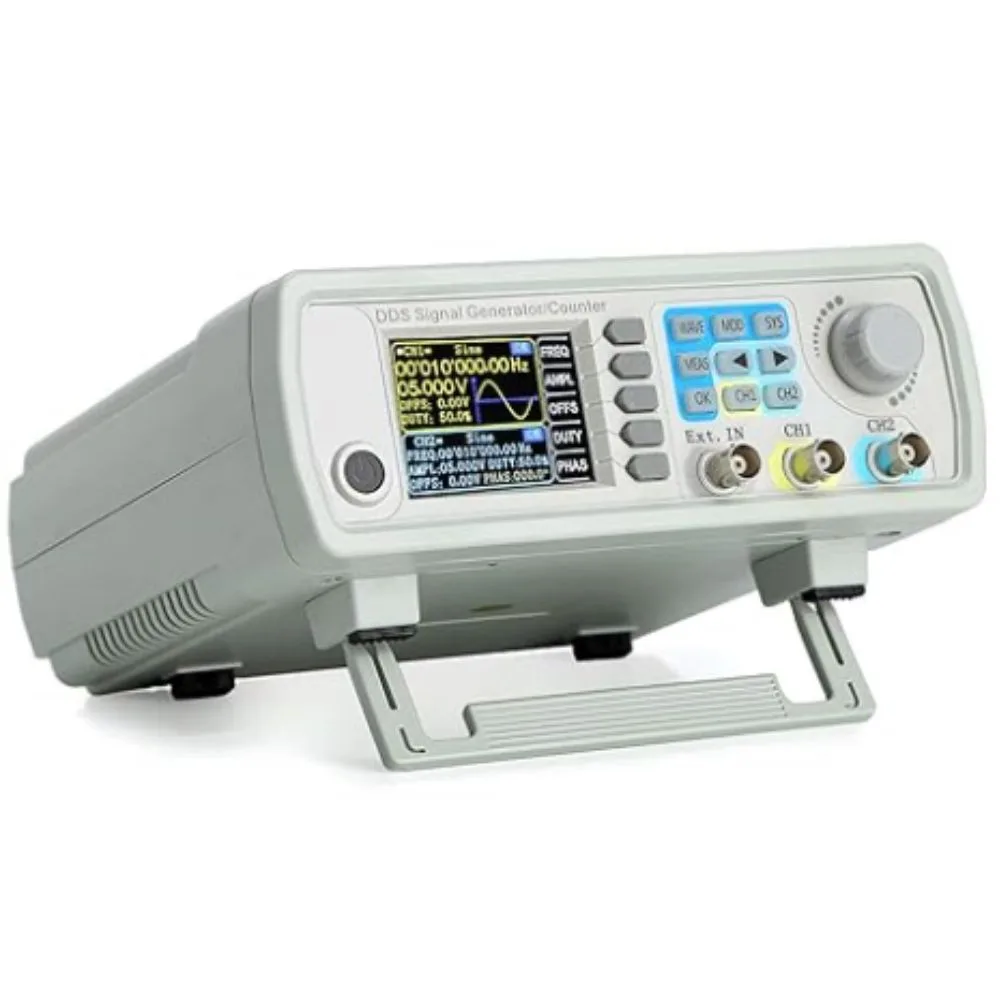

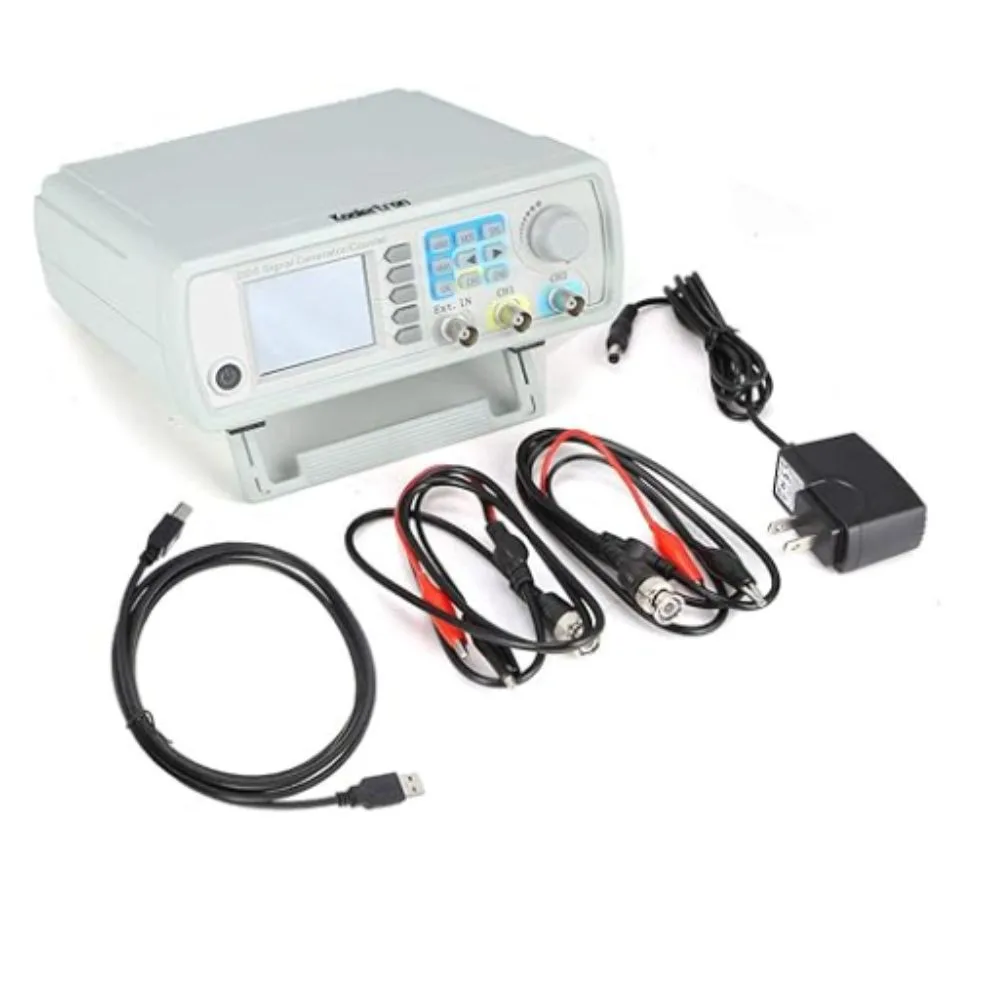
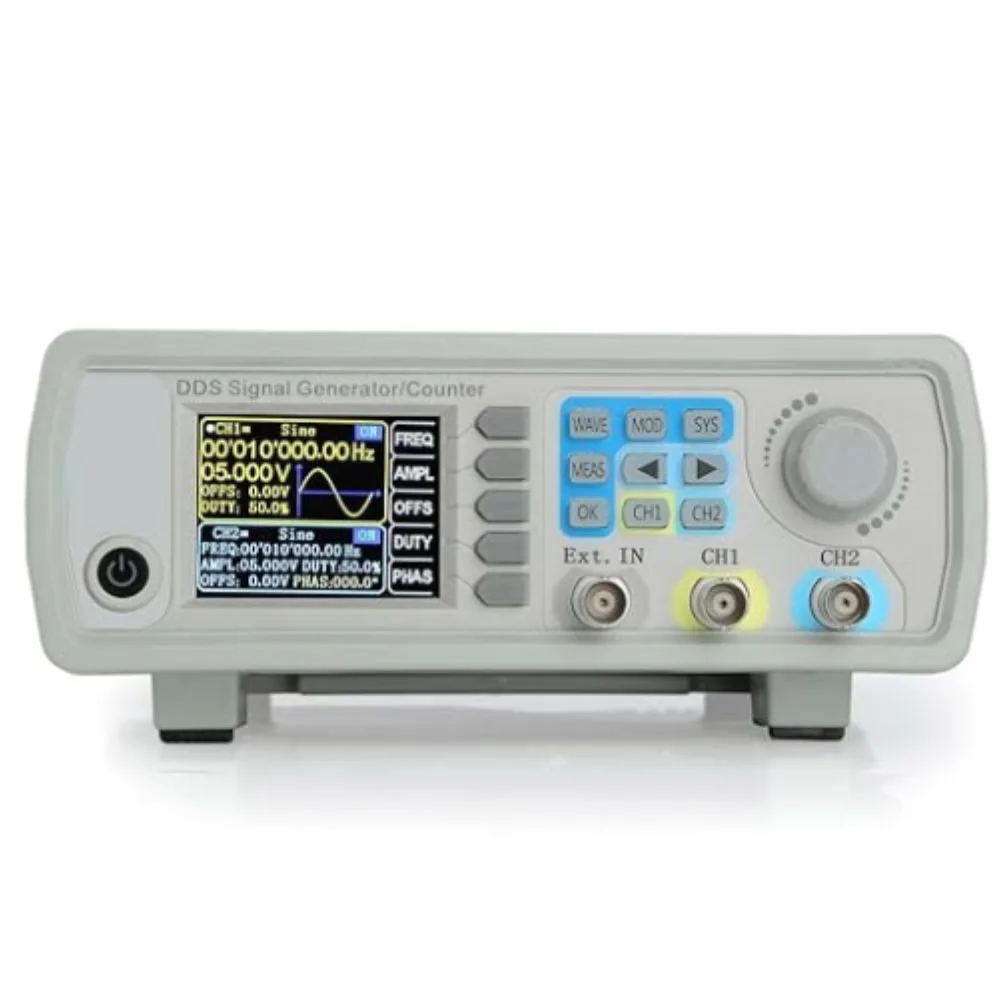
The 60 MHz DDS Signal Generator is a laboratory electronic instrument used to generate precise electrical waveforms for testing and designing electronic circuits. It uses Direct Digital Synthesis (DDS) technology to produce highly stable signals with accurate frequency control.
This device features dual independent output channels, allowing two different signals to be generated simultaneously. It also includes a frequency counter, making it useful for measuring unknown signal frequencies. With a 200 MSa/s sampling rate, it can produce clean and stable signals up to 60 MHz.
Features
-
Maximum output frequency: 60 MHz
-
Dual-channel output (CH1 & CH2)
-
200 MSa/s sampling rate
-
Built-in frequency counter
-
Arbitrary waveform generation
-
LCD display for waveform and parameters
-
Adjustable amplitude, offset, and duty cycle
-
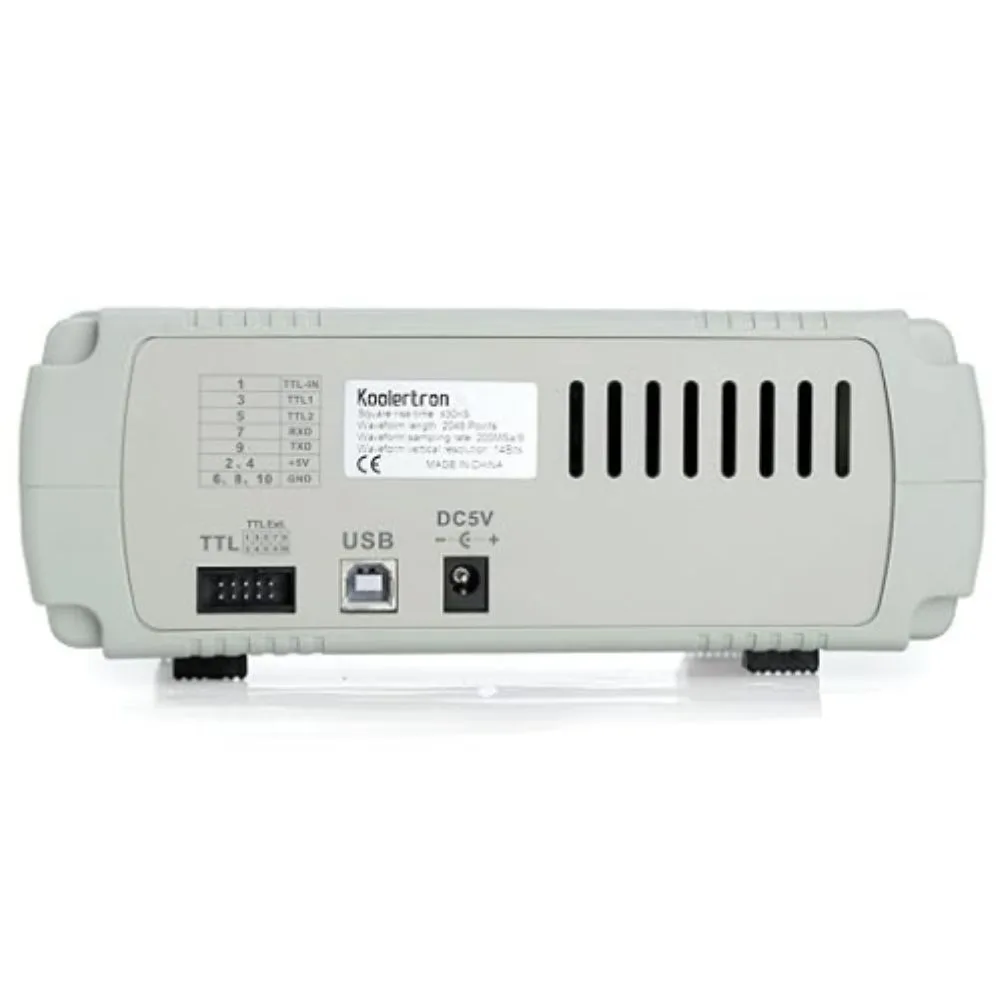
USB communication with PC (in many models)
Specifications
| Parameter | Specification |
|---|---|
| Signal Generation Method | DDS (Direct Digital Synthesis) |
| Maximum Frequency | 60 MHz |
| Channels | 2 independent outputs |
| Sampling Rate | 200 MSa/s |
| Waveform Types | Sine, Square, Triangle, Pulse, Arbitrary |
| Frequency Resolution | Up to 1 µHz (model dependent) |
| Output Amplitude | Typically up to 20 Vpp |
| Duty Cycle | Adjustable |
| Frequency Counter Range | Up to ~100 MHz |
| Display | LCD digital display |
| Interface | Buttons / rotary encoder / USB (varies by model) |
Common Waveforms
The generator can produce several signal types:
-
Sine wave – used for analog circuit testing
-
Square wave – used for digital circuit timing
-
Triangle wave – useful for amplifier testing
-
Pulse wave – used for switching circuits
-
Arbitrary waveform – custom signal patterns
Main Components
1. DDS Generator Core
Creates accurate digital waveforms which are converted to analog signals.
2. Dual Output Channels
Allows generation of two signals simultaneously.
3. Frequency Counter
Measures input signal frequency for testing unknown sources.
4. Control Panel
Includes knobs and buttons to adjust frequency, amplitude, and waveform type.
5. LCD Display
Shows waveform parameters such as frequency, amplitude, and duty cycle.
Applications
This instrument is widely used in:
-
Electronics laboratories
-
Circuit testing and design
-
Communication system experiments
-
Microcontroller and embedded system testing
-
Signal simulation
-
Engineering education
Example Uses
-
Testing audio amplifiers
-
Generating clock signals for microcontrollers
-
Debugging analog filters
-
Producing PWM signals for motor control
-
Testing RF circuits
Advantages
High frequency stability due to DDS technology
Two independent signal outputs
Wide range of waveform generation
Built-in measurement capability
High sampling rate for accurate signal reproduction


There are no reviews yet.