

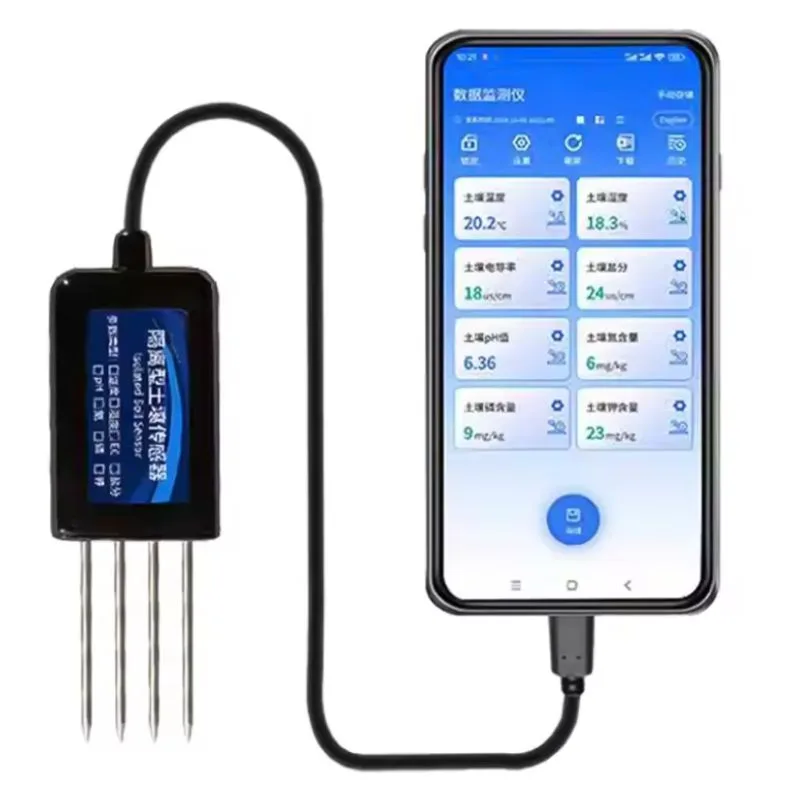
When choosing a sensor of this type, know that it supports:
-
Soil temperature (°C or °F)
-
Soil moisture/humidity or volumetric water content
-
Soil electrical conductivity (EC) (which often gives a measure of salinity/nutrient availability)
-
Soil pH (acidity/alkalinity)
-
Soil NPK (nitrogen, phosphorus, potassium) — not always included, but very useful for agricultural/fertility monitoring
-
Android app or compatible software for data logging/monitoring
-
Good probe quality and durability (especially if used in field/soil environments)
Specification of Product
Here are a few models that match your criteria:
-
A sensor described as “Temperature Moisture EC PH NPK Soil Tester Portable USB Type-C 8-in-1 Soil Sensor with Free Android App” (USB-C interface) lists those parameters.
-
A “7-in-1 Soil Sensor for Android – USB-C” supports: soil temperature, volumetric water content (moisture), EC, pH, and NPK among others.
-
A listing “Smart Soil Sensor NPK EC Moisture Temp pH Meter with APP Logger USB Rechargeable” shows pretty similar capabilities.
These show the concept is real and available.
Typical Specifications
Here are representative specs you might expect (confirm for the exact model you buy):
-
pH range: ~3-10 pH, resolution ~0.1 pH, accuracy ~±0.3 pH.
-
Moisture/volumetric water content: 0-100 % (or equivalent scale), resolution ~0.1 %, accuracy ±2-5%.
-
Temperature: Range maybe –20°C to +60°C (some support broader), resolution ~0.1°C, accuracy ~±0.5°C.
-
EC: Range maybe 0-20,000 µS/cm (or similar) in some models; accuracy ±3% FS in a range.
-
NPK: For nitrogen, phosphorus, potassium often given in mg/kg or equivalent; resolution maybe 1 mg/kg; accuracy ±2% FS in some units.
-
Interface: USB-C or micro-USB to Android device or app for data logging. Some mention “Free Android App”.
Applications
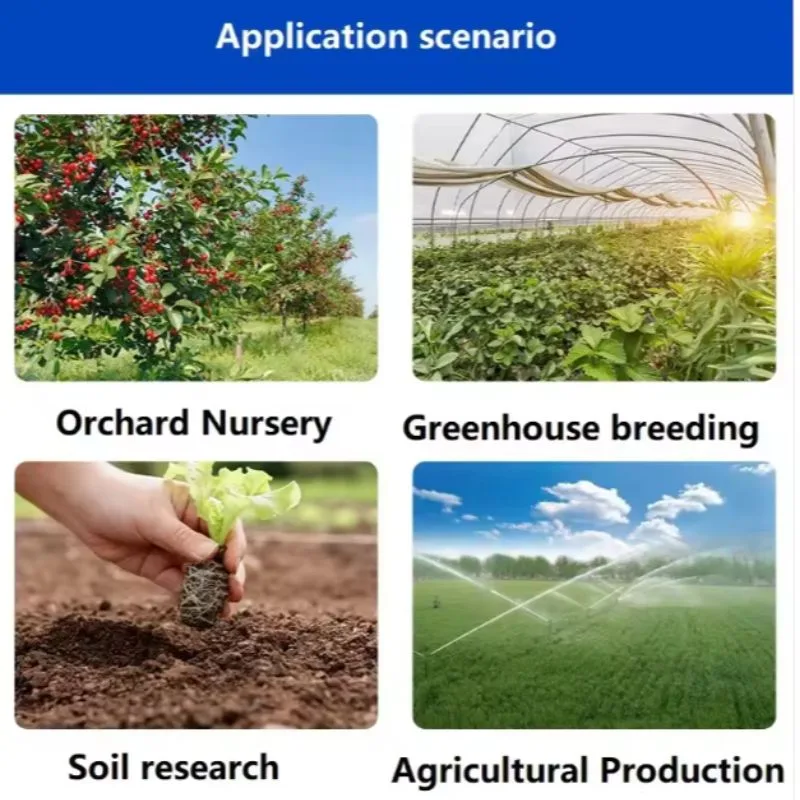
This type of sensor is useful for:
-
Farmers/agricultural plots who want to monitor soil fertility (NPK), acidity/alkalinity (pH) plus moisture & EC for irrigation/nutrient management.
-
Greenhouse operators or horticulture where you want more than just moisture — you want nutrient levels too.
-
Research or labs monitoring multiple soil parameters.
-
Gardeners/backyard farms wanting a “smart” soil meter with an app.
Tips for effective use
-
Calibrate or check: For pH and EC especially, ensure calibration or known reference values if high accuracy is needed.
-
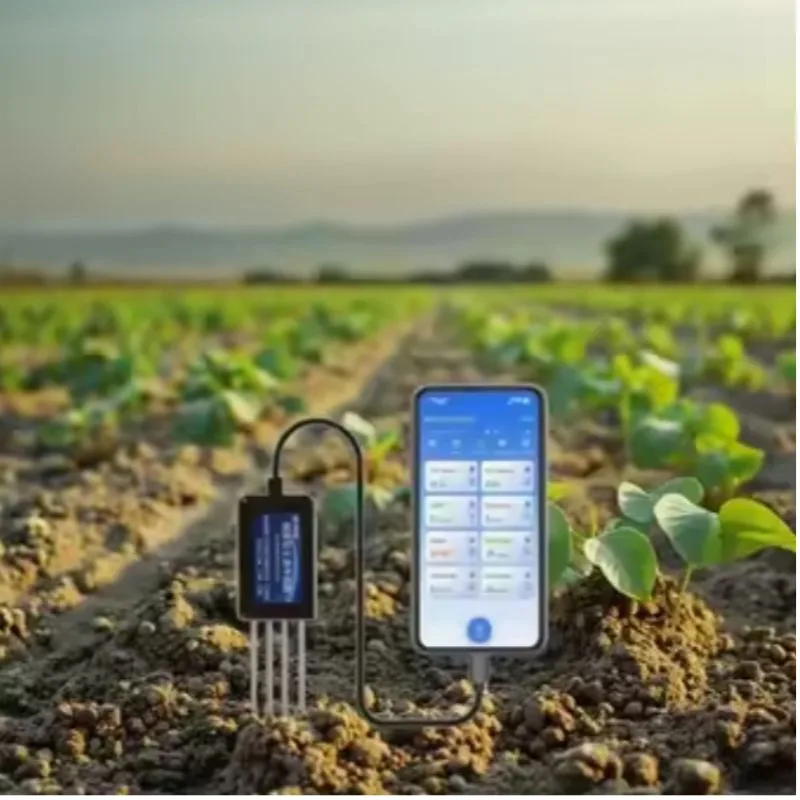
Insert probe correctly: Make sure the soil probe is fully inserted into the soil at the correct depth and good contact. Air gaps can give wrong moisture/EC readings.
-
Avoid extremes: Some sensors may struggle in very dry soil (very low moisture) or very saturated soil.
-
Clean after use: Soil salts/nutrients can accumulate on the probe affecting future readings; rinse and dry probe where recommended.
-
Use appropriate app: The Android app must support exporting or logging data if you want to monitor over time. Confirm the app’s functionality before purchase.
-
Understand NPK values: When the sensor reports N, P, K values, you’ll need to interpret what those mean for your crop — the sensor gives raw data; you’ll still need agronomic guidance.
-
Consider durability: If soil is very wet, compacted or has chemicals, pick a sensor with good build quality, corrosion resistance and good ingress protection (IP rating).
-
Power / interface match: If USB-C, ensure your Android device supports OTG/data-mode; or if device uses micro-USB make sure compatibility.
-
Check region/soil type: Some sensors may need soil-type settings or corrections if soil composition is unusual (very high clay, very high salt, etc).


There are no reviews yet.