

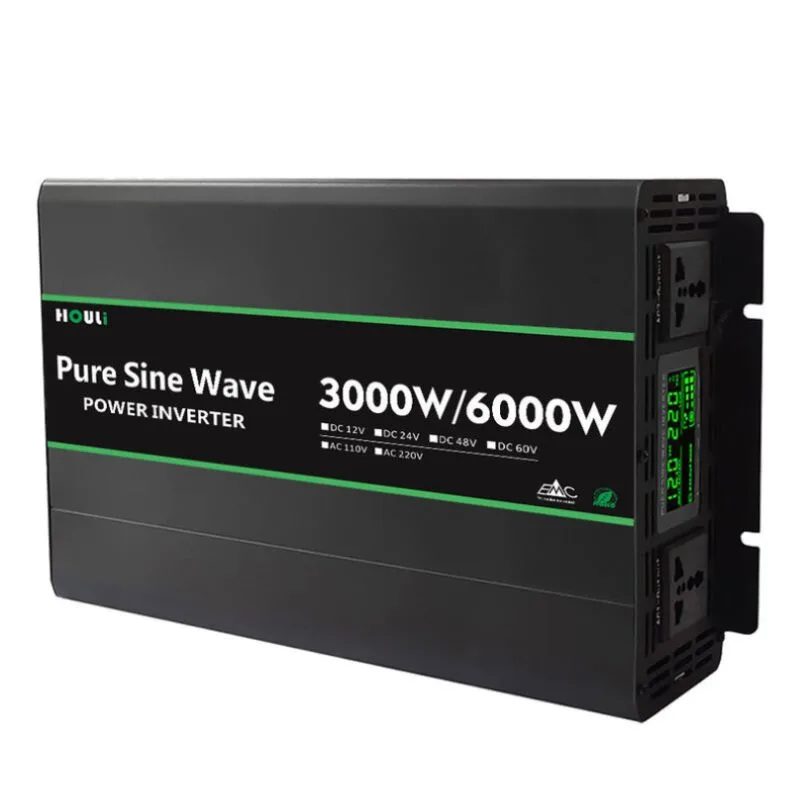

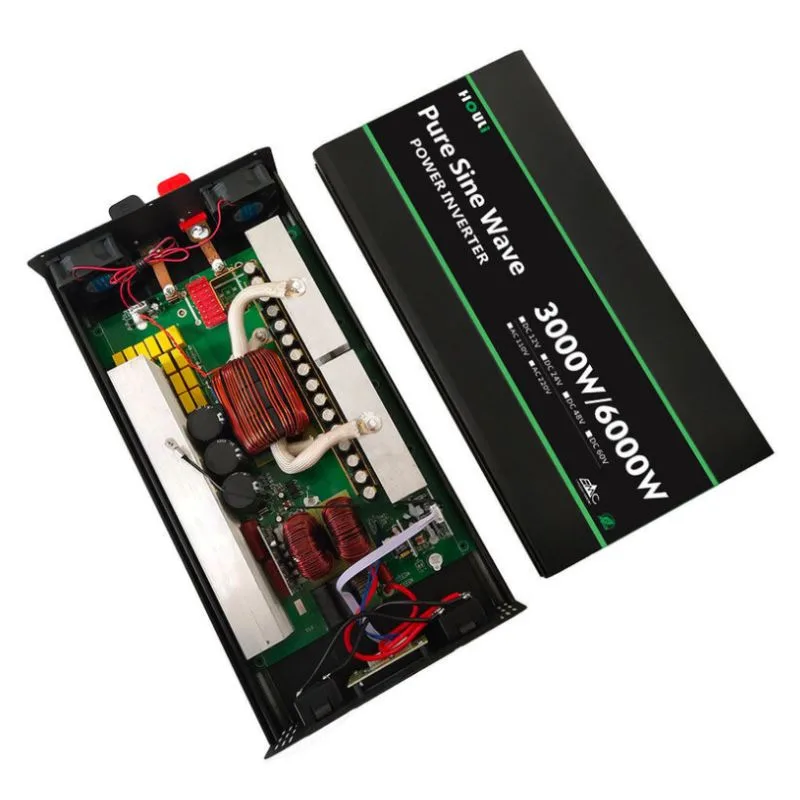
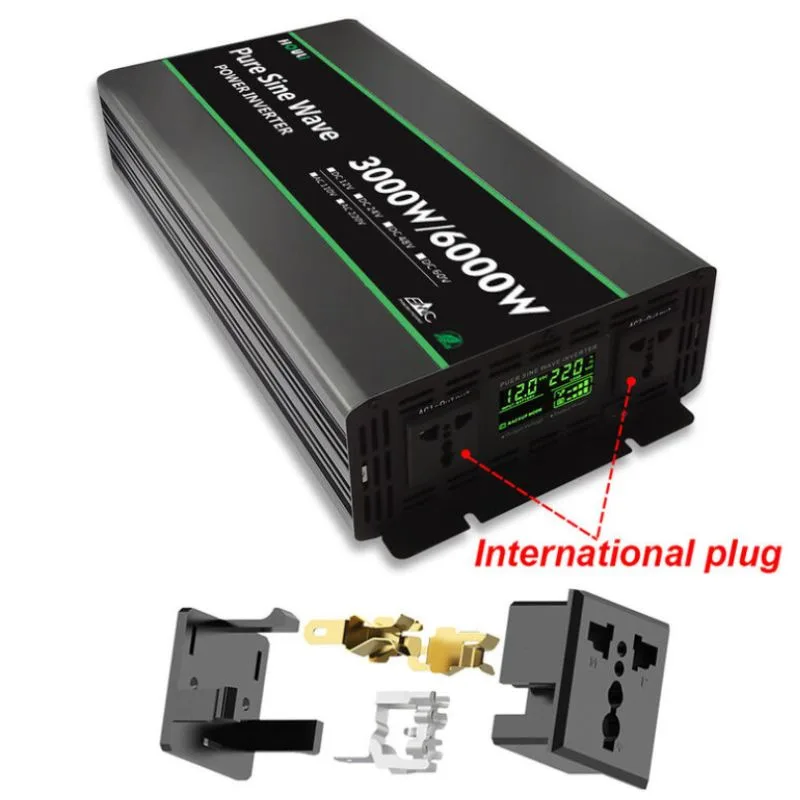


An inverter converts DC (in this case 24 V from a battery bank) into AC (220 V, the standard mains voltage in many parts of the world). A pure sine-wave inverter means the AC output is a clean sine waveform — almost identical to grid power — which is important for sensitive electronics, motors, and appliances.
A 3,000 W to 6,000 W model is substantial: it can power multiple appliances simultaneously (lights, fridge, TV, small air conditioner/motor) or support off-grid/backup/solar systems in a small house or workshop.
Key Features to Look For
When choosing a quality inverter of this specification, check the following:
-
Continuous power rating: The wattage it can sustain over time (e.g., 3 000 W or 6 000 W) — make sure your loads fit within this.
-
Surge/peak rating: Many appliances (especially with motors or compressors) draw significantly more on startup (2×, 3× or more). The inverter must handle the surge.
-
Input voltage: Ensure it’s compatible with 24 V DC input (some inverters are 12 V or 48 V only).
-
Output voltage & frequency: 220 V (or 230 V) AC, at 50 Hz (or 60 Hz depending on region).
-
Waveform type: Must be pure sine-wave (not modified sine) for full compatibility and safe usage with sensitive equipment.
-
Efficiency & idle draw: Good inverters convert the DC to AC with minimal losses, and draw low power when idle.
-
Protections & certifications: Over-voltage, under-voltage, overload, short-circuit, over‐temperature protections; good build quality; CE/UL/certified if possible.
-
Cooling & ventilation: 3kW–6kW generates heat, so the unit should have adequate cooling (fan, vents).
-
Battery bank sizing & wiring: With a 24 V input and large wattage output, you’ll need heavy gauge cables, good battery capacity (e.g., deep-cycle lead-acid or lithium), and proper installation.
-
Future load/flexibility buffer: Choose an inverter slightly larger than your current load to allow for growth or surge events.
Representative Product Options
Here are some example product types.
Here’s a summary of each:
-
24V‑to‑220V Pure Sine Wave Inverter 3000W: Entry-level for moderate loads (lighting, TV, fridge, some power tools) — good starting point.
-
24V‑to‑220V Pure Sine Wave Inverter 4000W: Slightly more capacity for heavier loads or more appliances at once.
-
24V‑to‑220V Pure Sine Wave Inverter 5000W: For more ambitious use: larger workshop tools, more simultaneous loads.
-
24V‑to‑220V Pure Sine Wave Inverter 6000W: High-capacity unit, suitable for heavy loads or future expansion.
-
24V‑to‑220V Pure Sine Wave Inverter 3000W with Charger/UPS: A combo with built-in charger/UPS functionality — useful if you want backup power + battery charging in one.
-
24V‑to‑220V Pure Sine Wave Inverter 6000W Off‑Grid Hybrid: Hybrid unit designed for off-grid / solar integration, large capacity.
-
24V‑to‑220V Pure Sine Wave Inverter 5000W Solar Ready: Model optimized for solar/battery system integration (MPPT charger or DC input from solar).
-
24V‑to‑220V Pure Sine Wave Inverter 4000W Rugged Industrial: Industrial grade, robust casing, high duty cycle, good for workshops or commercial applications.
How to Choose Which Size You Need
-
List all the appliances/devices you plan to run at the same time. Sum their continuous power consumption (in watts).
-
Add a buffer (e.g., + 20-30%) so you’re not running the inverter at full capacity always.
-
Consider surge requirement: if you have motors (fridge, AC, pump), they might require 2-3× their running watt at startup.
-
Choose an inverter whose continuous rating comfortably exceeds your sum (plus buffer) and whose surge rating covers the largest startup load.
-
For instance: if your devices sum to ~2,500 W continuous, you might pick a 3,000W unit. If you plan to run more or heavy tools, go 5,000W or 6,000W.
-
Remember battery capacity: A 24V system supplying 5,000W AC will draw much more DC current (accounting for losses) — you’ll need adequate battery amp-hours and safe wiring.
Important Installation & Use Tips
-
Use thick gauge cables for the DC input (24V side) — high currents at 24V require heavy wiring to avoid voltage drop and heat.
-
Ensure good battery bank: use appropriate battery chemistry (deep cycle lead-acid or lithium) rated for the currents, and make sure your battery’s capacity is enough for the expected run time.
-
Provide ventilation and cooling — high-power inverters generate heat; limit ambient temperature, keep airflow clear.
-
Match the input voltage range: some 24V inverters accept 21–32V or so — verify the range for your battery status during discharge.
-
Protect against overload, short-circuit, under-voltage (battery low), over-temperature. Ensure the inverter has these protections.
-
Use fuses or circuit breakers on the DC side to protect wiring and battery in case of fault.
-
When integrating into a solar system or backup system, consider charge controllers or hybrid features.
-
Keep the inverter away from moisture or dusty environment; ensure safe mounting and grounding.
-
Regularly inspect for loose connections, corrosion, battery health (terminals, cables).


There are no reviews yet.